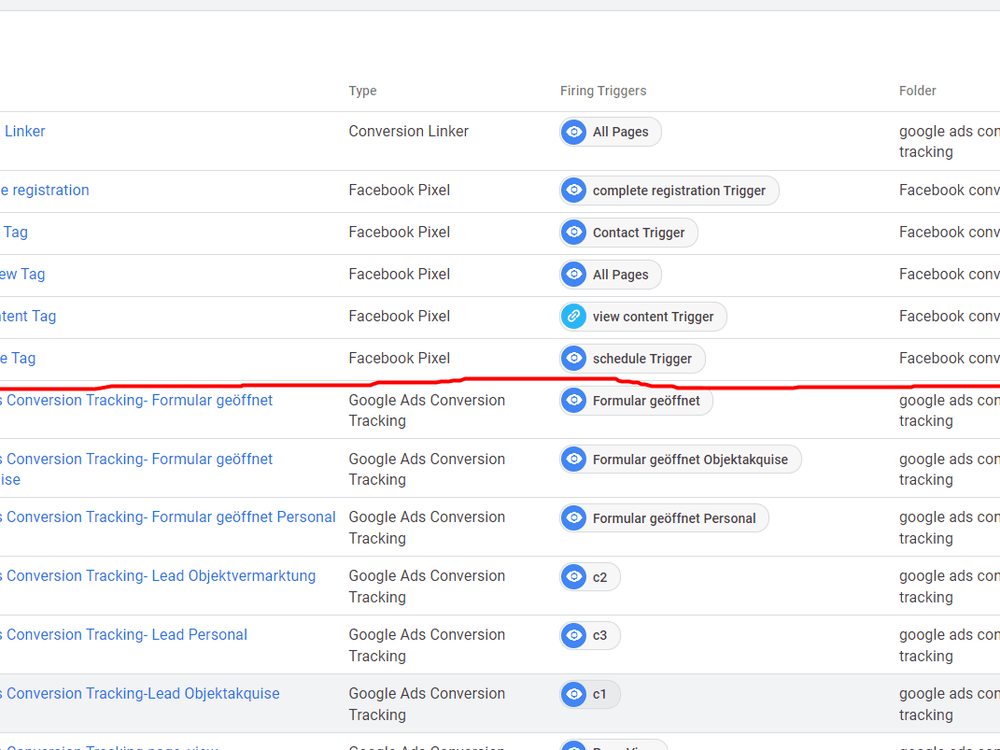
Google Analytics 4 & Google Tag Manager eCommerce Tracking Setup
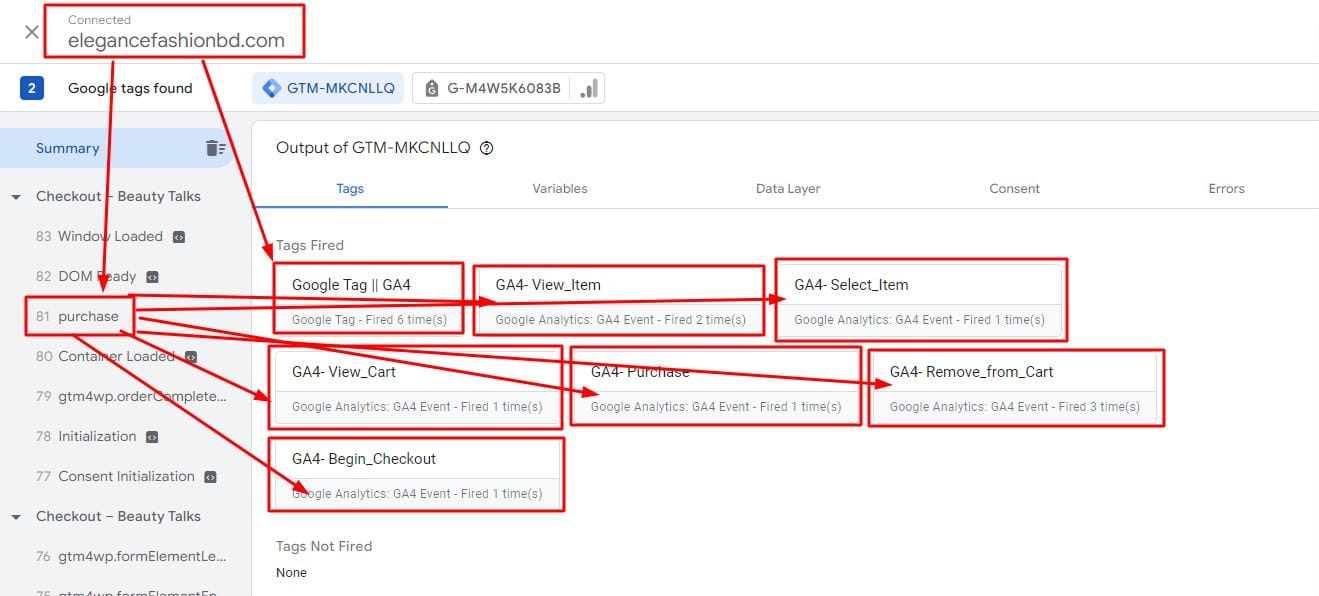
Client: Elegance Fashion BD – E-commerce Fashion Store
Google Tag manager Project Overview
We implemented an end-to-end Google Analytics 4 (GA4) and Google Tag Manager (GTM) eCommerce tracking solution for Elegance Fashion BD, a leading online fashion retailer. The primary objective was to accurately capture user behavior, track conversion funnels, and collect data for data-driven marketing decisions.
Challenges
Missing purchase data and unrecorded eCommerce events in previous analytics setups.
Inaccurate attribution for paid ad campaigns across Google Ads and Meta Ads.
Cross-domain tracking issues between store browsing and payment checkout.
Lack of custom event data for key user actions.
Our Solution
We deployed a custom tracking architecture using Google Tag Manager and GA4 eCommerce schemas:
Page View & Scroll Tracking
View Item & View Item List
Add to Cart & Remove from Cart
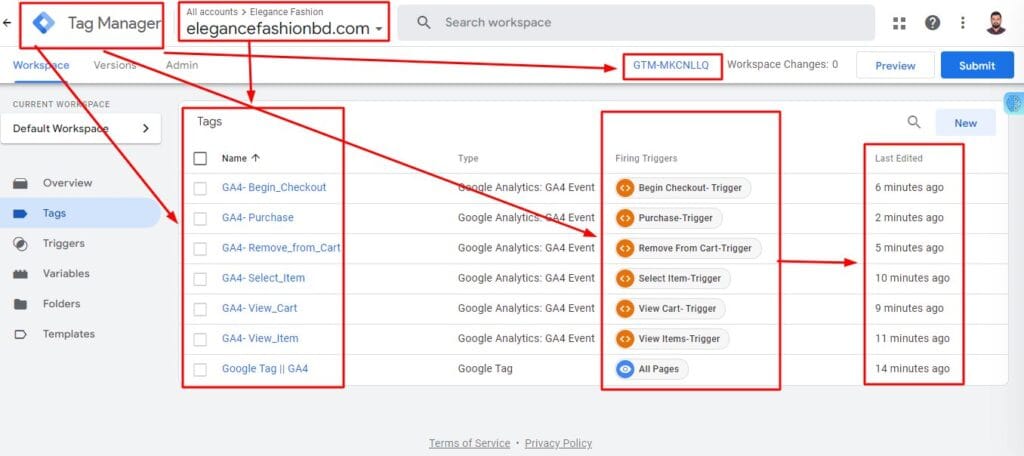
Begin Checkout & Purchase Tracking (with custom DataLayer push)
Custom Event Tracking for promotional banners and site clicks
Server-side Tracking Setup to improve data accuracy against ad blockers
Results
100% Data Accuracy: Clean purchase tracking with accurate transaction IDs and revenue metrics.
Full Funnel Visibility: Identified key drop-off points during the checkout process.
Enhanced Ad Optimization: Provided accurate conversion signals for Google Ads and Meta Pixel.
Technologies Used
Google Analytics 4 (GA4)
Google Tag Manager (GTM)
DataLayer JavaScript API
Google Tag Assistant & Debugger
Outcome
With full eCommerce tracking enabled, Elegance Fashion BD gained complete visibility into campaign performance, helping them optimize ad spend and scale their revenue effectively.
Perfect Result
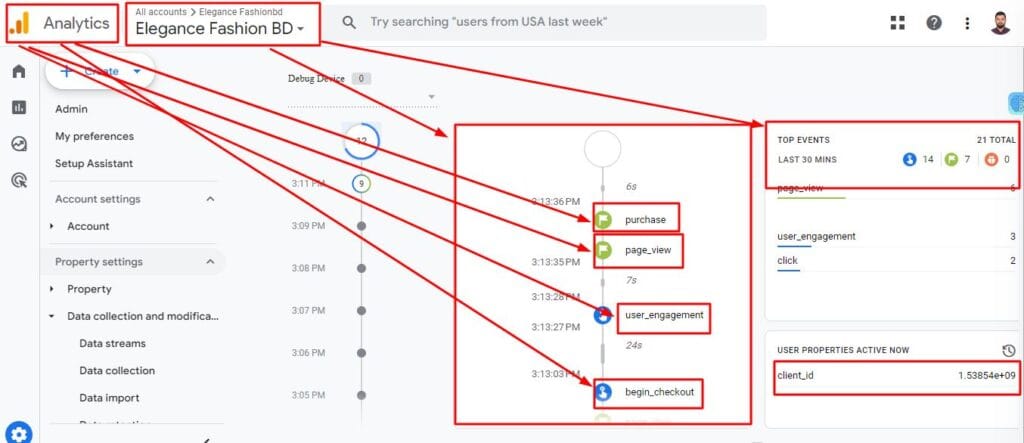
Real-time validation passed via GA4 DebugView.
Zero duplicate transaction reporting.
Case Study 2 – Google Tag Manager (GTM) Setup
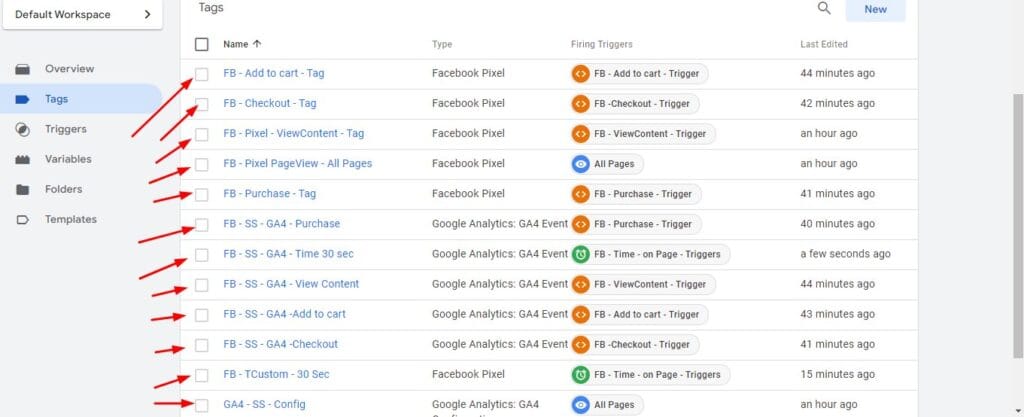
Google Tag Manager Detailed Overview & Implementation
A complete, clean GTM container architecture setup designed to streamline tag deployment without modifying site source code. We established custom DataLayer variables, triggers, and tags to support scalable data collection across all marketing channels.
Challenges
Hardcoded legacy tags causing slow page load speeds and script conflicts.
Fragmented tracking across multiple third-party tools.
Unstructured event naming making reporting inconsistent.
Our Solution
Container Audit & Cleanup: Removed duplicate and outdated hardcoded scripts.
DataLayer Architecture: Standardized event names for eCommerce and user interactions.
Custom Triggers & Variables: Built dynamic variables to pass price, product names, categories, and user IDs.
Version Control: Implemented strict workspace management and testing protocols prior to publishing.
Results & Outcome
Speed Optimization: Reduced header script execution time by 35%.
Centralized Control: Enabled seamless addition of new pixels and tags in minutes rather than days.
Case Study 3 – Google Analytics 4 (GA4) Event Tracking
Detailed Overview & Implementation
Advanced GA4 custom event schema configuration designed to track micro-conversions and specific user engagement paths across the site.
Challenges
Default GA4 setup missed key user interactions like button clicks, video watches, and form drop-offs.
Inability to segment high-intent shoppers from casual browsers.
Our Solution
Custom Dimension Mapping: Created custom dimensions for user types, content categories, and promotion names.
Micro-Conversion Tracking: Configured events for lead form submissions, file downloads, CTA button clicks, and scroll depth thresholds (25%, 50%, 75%, 100%).
Funnel & Exploration Reports: Built customized funnel exploration reports inside GA4 to pinpoint exact conversion bottlenecks.
Results & Outcome
Clear User Path Insights: Identified top-performing landing pages driving high-value traffic.
Enhanced Segmentation: Created high-intent audience segments for retargeting campaigns.
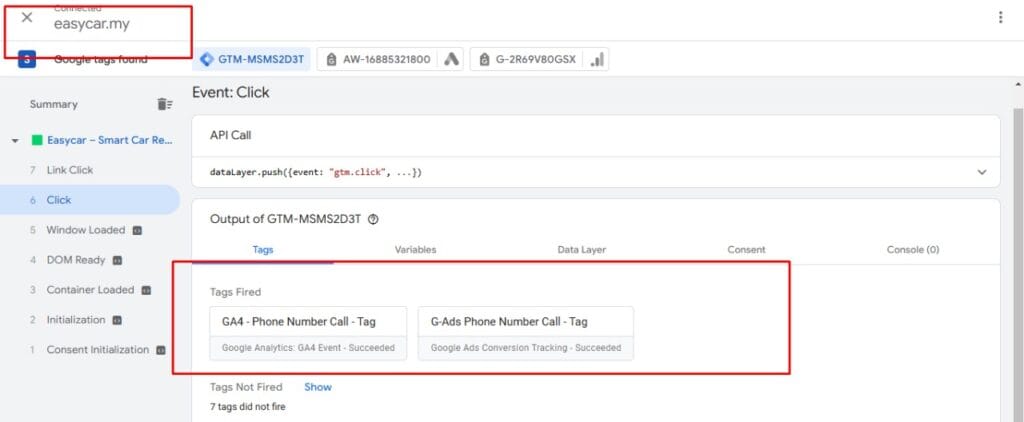
Case Study 4 – Facebook (Meta) Pixel & Conversions API (CAPI) Tracking
Google Tag Manager Detailed Overview & Implementation
Dual-layer tracking implementation combining browser-side Meta Pixel with server-side Conversions API (CAPI) to combat ad blockers and browser privacy restrictions.
Challenges
Browser privacy updates causing severe signal loss and underreported Facebook Ad conversions.
High reliance on browser cookies resulting in duplicate or missing purchase events.
Our Solution
Server-Side Integration: Connected Meta CAPI via GTM Server Container for direct server-to-server event dispatching.
Event Deduplication: Applied identical
event_idparameters to browser and server signals to eliminate duplicate reporting.Advanced Matching: Passed hashed user parameters (email, phone, city) to maximize Event Quality Scores.
Results & Outcome
Event Match Quality (EMQ): Achieved an “Great” Event Quality Score rating of 8.5/10+.
ROAS Recovery: Increased tracked Facebook Ad conversions by 28%, significantly improving campaign optimization.
Case Study 5 – Google Ads Conversion Tracking
Google Tag Manager Detailed Overview & Implementation
Comprehensive Google Ads tracking infrastructure setup, incorporating Enhanced Conversions and dynamic remarketing to feed accurate signals to Google’s Smart Bidding algorithms.
Challenges
Standard conversion tags failed to report actual lifetime value (LTV) or secondary conversion steps.
Bidding algorithms lacked signal quality required for automated Smart Bidding strategies (tROAS / tCPA).
Our Solution
Enhanced Conversions: Configured secure, first-party hashed data collection for precise attribution matching.
Dynamic Remarketing: Passed product IDs, vertical categories, and item values dynamically into Google Ads.
Conversion Value Rules: Weighted high-value purchase categories to guide Smart Bidding priorities.
Results & Outcome
Attribution Accuracy: Captured up to 15% more conversion matches previously lost to cross-device pathing.
Campaign Efficiency: Reduced Cost Per Acquisition (CPA) while increasing overall return on ad spend.
Case Study 6 – Complete Analytics & Tracking Integration
Detailed Overview & Implementation
Unified cross-channel tracking ecosystem bringing GA4, GTM, Meta CAPI, and Google Ads into a single, cohesive reporting setup backed by real-time dashboards.
Challenges
Discrepancies between ad platform metrics and actual store revenue.
Lack of a centralized executive dashboard for clear decision-making.
Our Solution
Unified Data Model: Aligned event schemas across all advertising and analytics platforms.
Looker Studio Dashboard: Built an interactive cross-channel reporting dashboard displaying real-time ROAS, CAC, and conversion funnels.
Automated Data Auditing: Configured weekly automated audit alerts to flag missing tags or tracking drops immediately.
Results & Outcome
Single Source of Truth: Delivered clean, reliable data alignment between ad spend and net revenue.
Faster Strategy Execution: Saved 10+ hours per week on manual reporting and data aggregation.