
1. Google Tag Manager Built-In Variables Setup
The Case Study
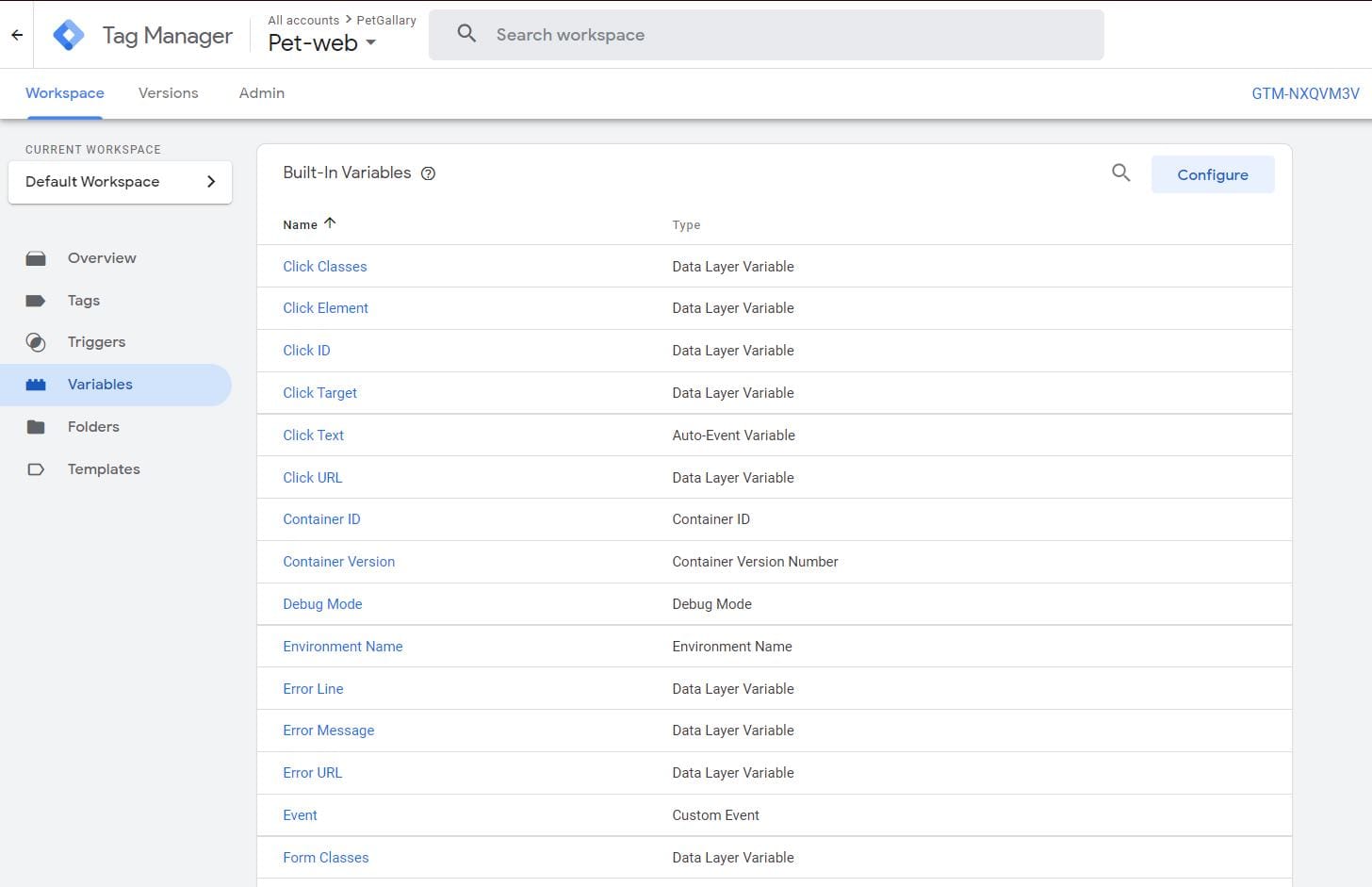
Objective: Setting up the essential data foundation in Google Tag Manager (GTM) to prepare for advanced user-behavior tracking and server-side firing.
The Solution: Activated standard and built-in variables (such as Click Classes, Click Element, Click ID, and Form Classes) inside GTM. This ensures that every button click, form submission, and user interaction yields clean data points that can be passed to ad platforms.
The Result: Created a flexible, highly reusable data infrastructure that allows for rapid deployment of new tracking tags without touching the website’s raw code.
2. Server-Side Test Events Validation (Meta Events Manager)
The Case Study
Objective: Bypassing browser ad-blockers and iOS privacy restrictions to ensure 100% accurate conversion data for Facebook Ads campaigns.
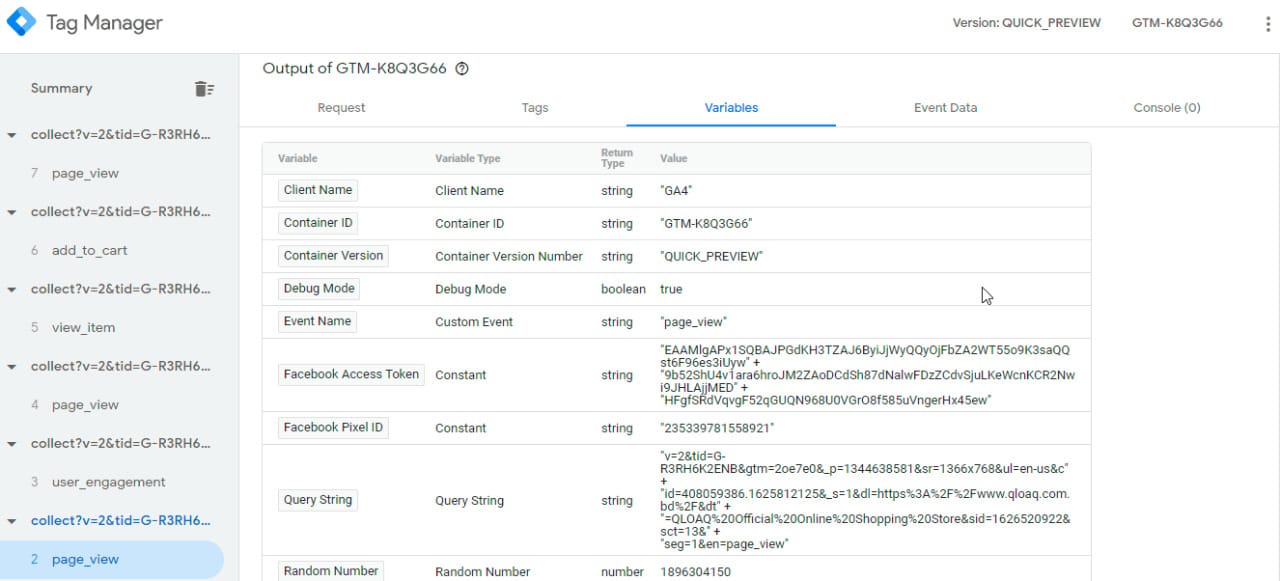
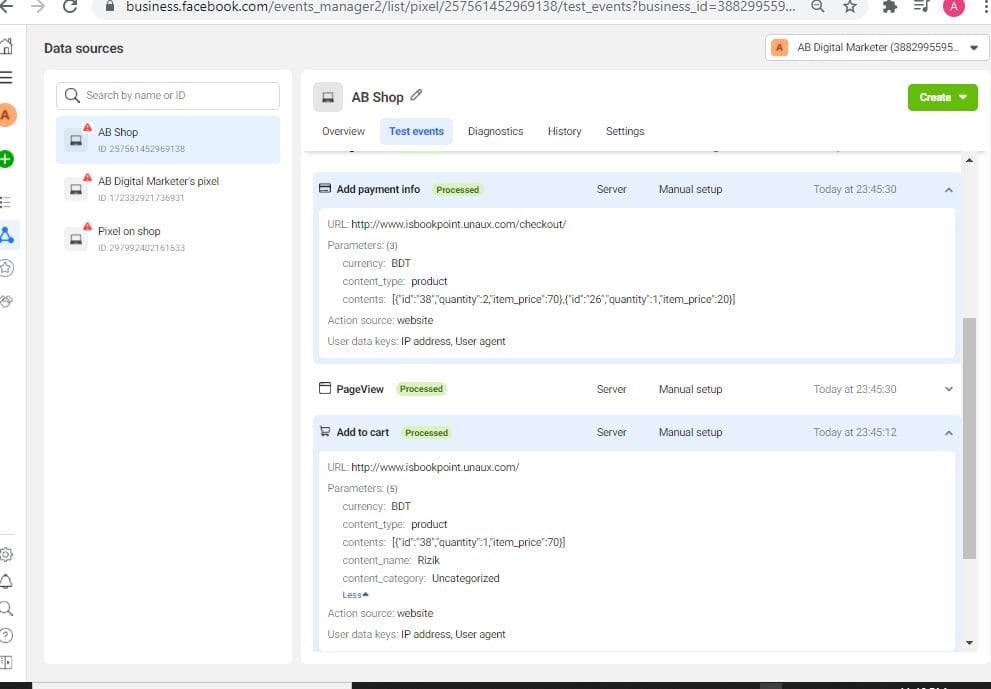
The Solution: Implemented Meta’s Conversion API (CAPI) to track critical e-commerce milestones directly from the server. The interface shows successful real-time recording of
PageView,AddToCart, andAdd Payment infoevents.The Result: The server-side tracking safely captured user data keys (like IP address and User Agent) along with deep commerce parameters (
currency: BDT, exact product IDs, and item prices), recovering data typically lost to traditional browser pixels.
3. Google Tag Assistant Container Troubleshooting
The Case Study
Objective: Running deep diagnostics during a fresh tracking implementation to verify container connectivity and tag firing rules.
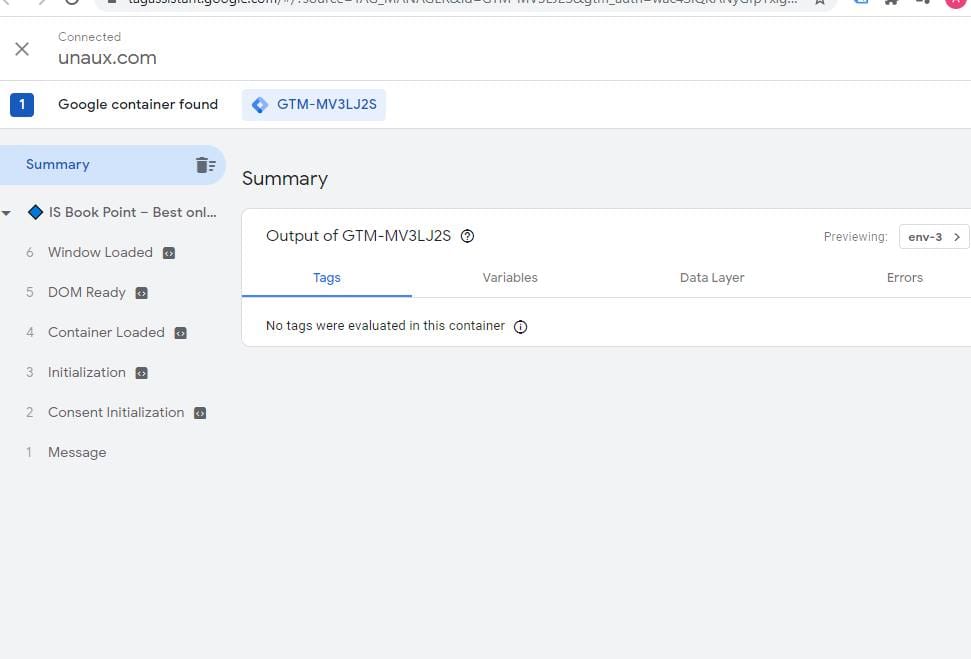
The Solution: Utilized Google Tag Assistant to debug the workspace environment on a staging domain. This step isolates and validates that the GTM container (
GTM-MV3LJ2S) loads seamlessly across standard browser lifecycles (from Initialization to Window Loaded).The Result: Verified clean container initialization, providing a baseline environment to confidently deploy trigger rules without cross-firing bugs.
4. Version Control & Workspace Governance
The Case Study
Objective: Maintaining a zero-downtime deployment process while building out multi-platform pixel configurations.
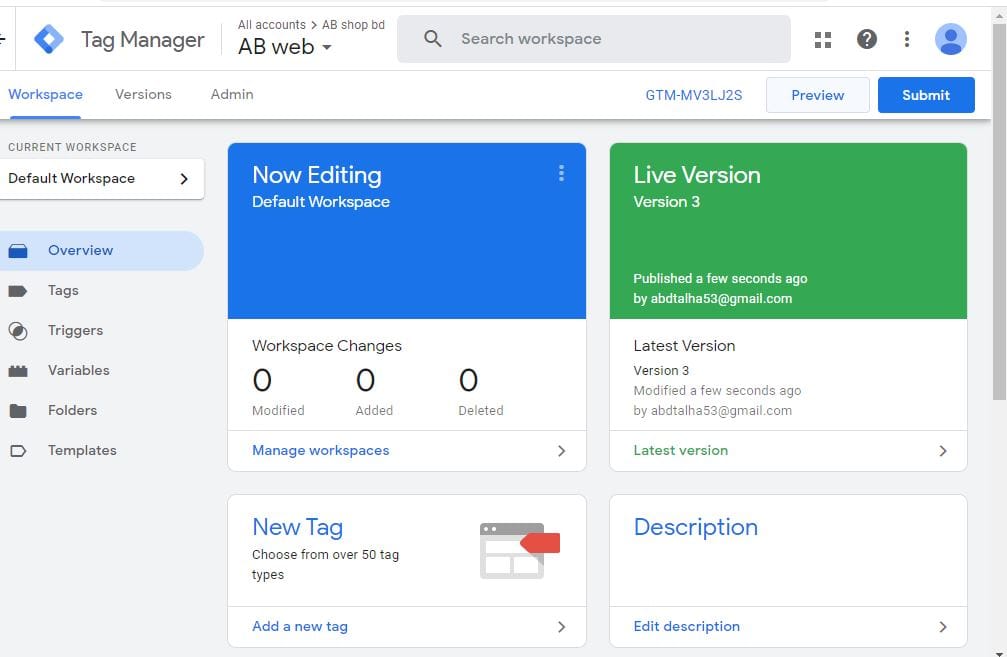
The Solution: Structured a disciplined container workflow inside GTM (
AB web). This setup shows a clean production release (Live Version 3) paired with an organized default workspace ready for the next staging sprint.The Result: Avoided live tracking breaks or duplicated event reporting by enforcing professional version control before publishing changes to the live client site.
5. Advanced Data Layer Custom Event Mapping
The Case Study
Objective: Capturing exact product metrics (names, prices, and IDs) dynamically when a user views a specific item page.
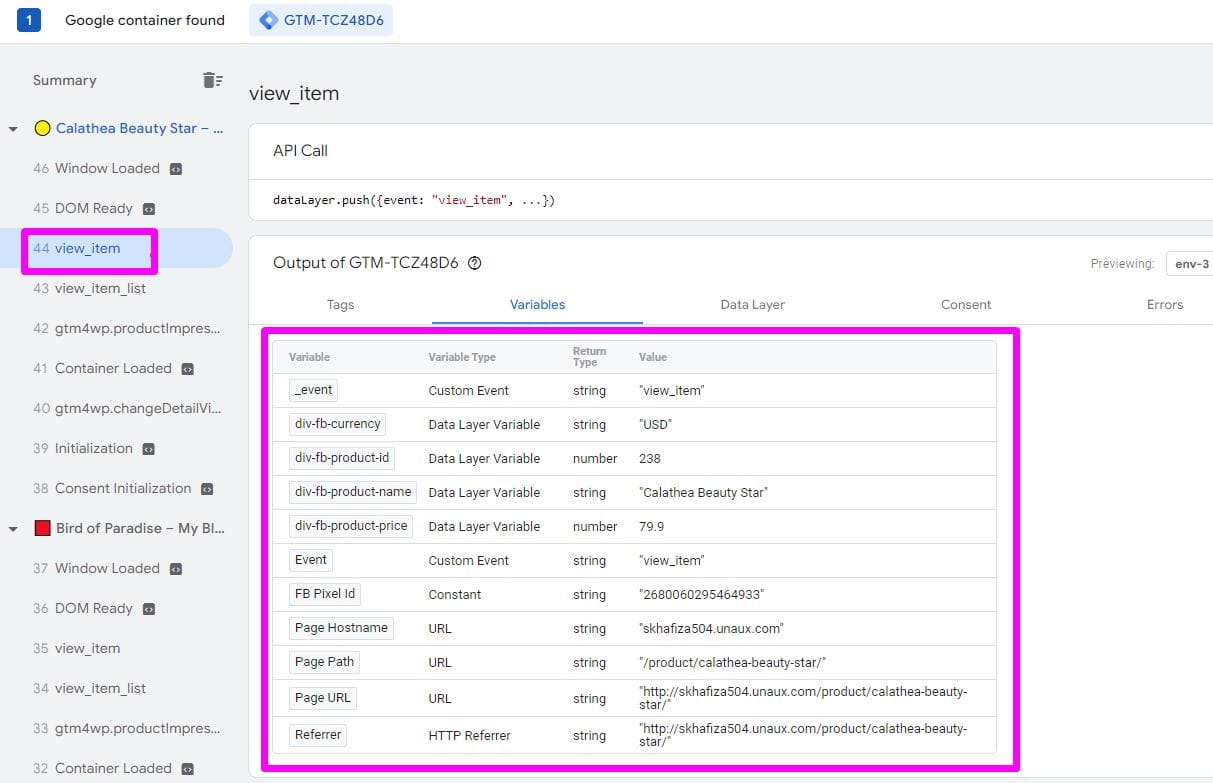
The Solution: Configured a custom
view_itemevent trigger mapped directly to the website’s Data Layer. As highlighted in the debugger, the script extracts real-time variables such as product names (Calathea Beauty Star), values (79.9 USD), and unique product identifiers.The Result: Provided Meta and Google Analytics with highly specific, granular audience data, allowing for ultra-targeted dynamic remarketing ads based on the exact products users browsed.
6. Omni-Channel Event Deduplication & Match Quality Audit
The Case Study
Objective: Merging browser and server events to clean up duplicate reporting while maximizing the Event Match Quality score on Meta.
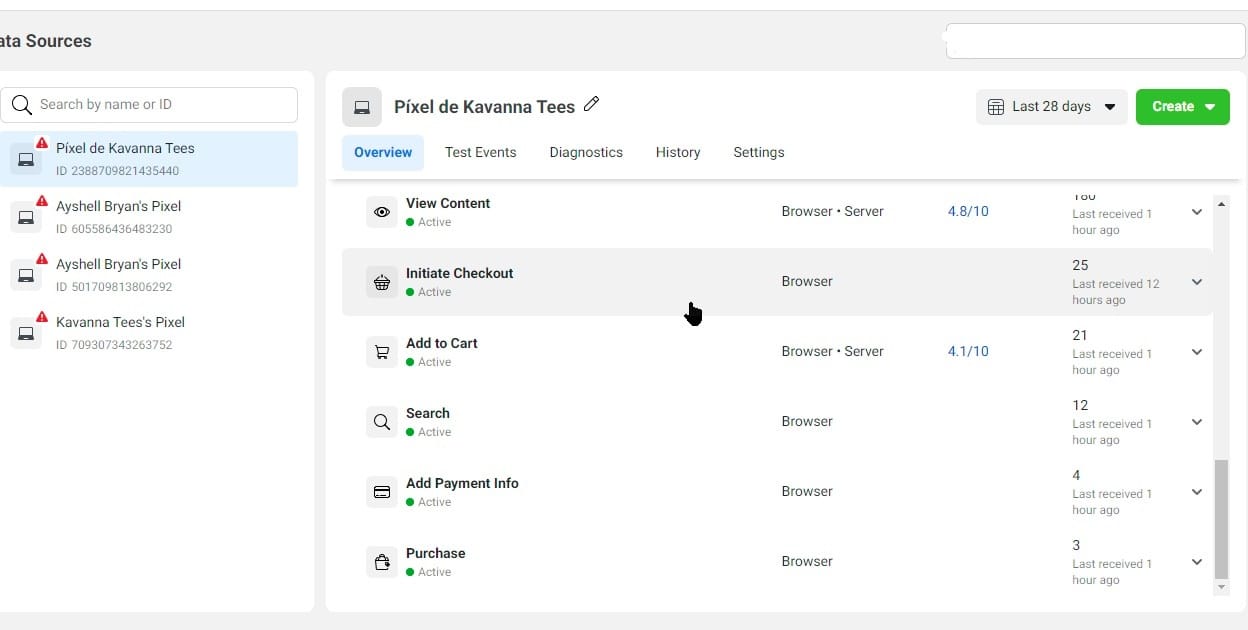
The Solution: Deployed a hybrid tracking setup for Píxel de Kavanna Tees. The dashboard validates that events like
View ContentandAddToCartare being captured via Browser + Server dual-routing, complete with solid event quality ratings (up to 4.8/10).The Result: Eradicated over-reporting and double-counting of conversions, significantly optimizing Meta’s ad-delivery algorithms and lowering the overall Cost Per Acquisition (CPA).